What We Actually Worship
Hidden in Plain Sight: Idols, Gods and What Is Behind Them
The previous article in this series established something the rest of Scripture never lets go: there is one Name above every name, one God worthy of the worship for which human beings were created. That is not merely a theological claim. It is the answer to the deepest question the series has been asking.
But it raises an immediate and urgent question in return.
If humanity was created to worship the true God, if the instinct to worship is not a human invention but a design woven into our nature from the beginning, then why does every civilization in human history end up worshiping something else? Why are there temples on every continent? Priests in every culture? Sacrifices offered in every era? Sacred places marked out in every language? The universality of religious practice is one of the most striking facts about human beings, and the explanation most people have been given, that religion is a human construct, a way of explaining the unexplained and controlling the uncontrollable, does not actually account for what the evidence shows.
The Bible has a different explanation. And it has been hiding in plain sight across the Old and New Testaments, waiting for anyone willing to follow it carefully.
Idolatry is not the invention of religion. It is the corruption of worship that already existed. And what stands behind the idols is not nothing.
We Were Made to Worship
Genesis does not begin with idolatry. It begins with communion.
Adam and Eve walked with God in the garden. Worship in its original form was not a religious ritual or a cultural practice. It was the natural orientation of creatures toward their Creator, the posture of beings who knew who made them and lived in unbroken relationship with that knowledge. Worship existed before the fall. It was not invented as a response to fear or a way of managing the unknown. It was the texture of life in right relationship with God.
Then the serpent came. And the question he raised was not whether God exists but whether God can be trusted. Whether His instructions are for our benefit or our limitation. Whether something better might be available outside of His provision. The fall was not the invention of religion. It was the redirection of an already-existing worship impulse away from the One it was designed for and toward something else.
This is the thread the series has been building toward since the earliest articles. The instinct is not wrong. The direction became wrong. Human beings did not create the need to worship out of nothing. They were made with it. What happened after the fall, and dramatically after Babel when the nations were scattered and the divine order of the world was disrupted, is that the worship instinct found new objects. Scripture will eventually reveal that false worship was not merely directed toward human imagination, but toward real spiritual powers that had set themselves against God.
The Rebellion of the Nations
The Babel article in this series traced the moment when God scattered the nations across the earth. The Divine Council article showed what happened next: God allotted the nations to the oversight of spiritual beings, members of the heavenly assembly, while keeping Israel as His own direct inheritance.
Deuteronomy 32:17 adds a detail that changes everything about how we read the subsequent history of the nations: “They sacrificed to false gods, which are not God, gods they had not known, gods that recently appeared, gods your ancestors did not fear.”
And then the New Testament makes the implication explicit. Paul writes to the Corinthians about food offered to idols and says: “The sacrifices of pagans are offered to demons, not to God.” (1 Corinthians 10:20) The idol itself is nothing. The wood is wood. The stone is stone. The metal is metal. But the worship directed toward the idol is not directed into empty air. Something receives it. Something real stands on the other side of that offering.
Romans 1 traces the theological arc of what happened to the nations after they turned from the Creator. They knew God, Paul writes, or at least enough of God was visible in creation that they were without excuse. But they neither glorified Him as God nor gave thanks to Him. Their thinking became futile. Their hearts were darkened. And then the decisive move: “they exchanged the glory of the immortal God for images made to look like a mortal human being and birds and animals and reptiles.” (Romans 1:23)
The exchange is the key. Idolatry is not the creation of something new. It is the substitution of something lesser for something greater, the redirecting of worship that was always meant for God toward created things that were never designed to receive it.
Are Idols Really Nothing?
Scripture speaks about idols in two ways that can seem contradictory until you understand the distinction being made.
On one hand the prophets mock idols with devastating wit. Isaiah describes a man who cuts down a tree, uses half of it for firewood to warm himself and cook his food, and then fashions the other half into a god and falls down before it: “He prays to it and says, ‘Save me! You are my god!'” (Isaiah 44:17) Psalm 115 catalogs the idol’s helplessness with precision: it has a mouth but cannot speak, eyes but cannot see, ears but cannot hear, hands but cannot feel, feet but cannot walk. Those who make idols become like them.
Jeremiah describes idols as scarecrows in a cucumber field, unable to do harm or good, objects of mockery rather than reverence. The point is clear and consistently made: the carved object itself has no power, no life, no ability to respond or act. In that sense, an idol is nothing.
And yet God cares about idolatry with an intensity that would be disproportionate if idols were simply harmless pieces of wood and stone. The first two commandments address it directly. The prophets return to it constantly. God describes Himself as a jealous God in the context of idol worship. The entire history of Israel’s judgment is bound up with the question of whether the people will worship YHWH alone or turn to the gods of the surrounding nations.
Why does God care so much about something that is nothing?
Because the idol itself is nothing, but the worship directed toward it is not directed at nothing. The invisible powers that stand behind the visible objects are real. And the nation or individual that turns from the living God to worship those powers has made an exchange with consequences that extend far beyond the carved object in front of them.
What Is Actually Behind Them
Deuteronomy 32:17 uses a specific Hebrew word for what Israel sacrificed to: shedim. The word is sometimes translated demons, sometimes destructive beings, sometimes divine powers. It appears only twice in the Hebrew Bible, here and in Psalm 106:37, where it describes the same reality in even more chilling terms: “They sacrificed their sons and their daughters to false gods. They shed innocent blood, the blood of their sons and daughters, whom they sacrificed to the idols of Canaan.”
Children were sacrificed. This deserves to be stated plainly and its implications drawn out carefully.
No parent invents a religious system out of imagination and then decides that system requires the death of their child. The grief of losing a child is among the most absolute and shattering experiences a human being can endure. Cultures across the ancient world, from Canaan to Carthage to Mesoamerica, practiced child sacrifice to their gods. They were acts of desperate worship directed toward powers that demanded the most costly offering a human being could make. The people who practiced them believed something real was on the other side. Scripture tells us they were right about that, while being catastrophically wrong about everything else.
Paul’s statement in 1 Corinthians 10:20 is the New Testament’s clearest identification of what those powers were: demons. Not the wild-eyed horned figures of popular imagination but the spiritual beings who have set themselves against God’s purposes, the fallen members of the heavenly assembly whose corruption Psalm 82 describes, the princes of nations that Daniel 10 shows operating behind the scenes of human history. They are real. They received worship that was always meant for God. And the cost of that misdirected worship, measured in the blood of children among countless other things, is one of the reasons Psalm 82 ends with a prayer: rise up, O God, and judge the earth.
This is not an invitation to fear. It is an invitation to clarity. Understanding what actually stands behind idolatry helps explain both why God cares so intensely about it and why the cross matters so completely. At the cross, Paul writes in Colossians 2:15, Christ “disarmed the powers and authorities and made a public spectacle of them, triumphing over them.” The powers behind the idols have been defeated. Their claim on the nations has been broken. The worship that was redirected away from God is being called back to Him from every tribe and language and people and nation. The Revelation 7:9 vision is the answer to every shedim that ever received a sacrifice that belonged to God.
Why God Forbade Images
The second commandment has puzzled readers for centuries. “You shall not make for yourself an image in the form of anything in heaven above or on the earth beneath or in the waters below.” (Exodus 20:4) Why does God care so intensely about carved representations? Is He simply asserting His own uniqueness? Is He protecting His people from a slippery slope toward polytheism?
The answer hiding in plain sight is more theologically profound than either of those explanations.
The nations of the ancient world made images of their gods because they needed to see what their god looked like. They asked the question visually and answered it with their hands, shaping stone and metal and wood into representations of divine power. Every idol in the ancient world is an answer to the question: what does our god look like?
God had already answered that question before anyone thought to ask it. Not with stone or metal or wood. With a living being, made in His image, breathed into existence by His own breath, placed in the world He created as His living representation. Genesis 1:26-27 is not merely a statement about human dignity. It is a statement about divine representation. Humanity is God’s image in the world. When God forbids the making of images, He is not simply prohibiting a religious practice. He is declaring that His image already exists, that it breathes and walks and bears His likeness, and that to carve a substitute is both unnecessary and an affront to what He has already made.
The pagan world asked what their gods looked like and carved the answer. God asked what He looked like and pointed at a person.
This reframes idolatry at its deepest level. It is not merely the worship of the wrong object. It is the replacement of God’s living image, humanity made in His likeness, with a dead one. It is the exchange of the image God breathed into existence for an image humanity carved with its own hands. And it explains why idolatry and the dehumanization of people so often go together throughout biblical history. When you replace God’s living image with a carved one, you have already begun to treat the living image as less valuable than the object you made to replace it.
Why Every Culture Looks So Similar
One of the most striking observations in the study of ancient religions is how consistently the same categories of deity appear across cultures that had no contact with each other.
Storm gods. Fertility gods. Sun gods. Death gods. Sacred mountains where heaven and earth meet. Temples that mirror the structure of the cosmos. Priests who mediate between the human and the divine. Sacrifices offered to secure blessing and avert disaster. The similarities are too consistent and too widespread to be explained by cultural borrowing alone.
The Bible does not explain every mythology or trace every pantheon back to a specific spiritual source. It does not need to. What it provides is a framework that makes the pattern comprehensible. The nations were scattered at Babel. They were placed under the oversight of spiritual beings. Those spiritual beings, as Psalm 82 describes, failed in their assignment and led the nations into corruption rather than justice. The worship that was embedded in human nature as an orientation toward the true God was redirected toward created beings that accepted what belonged only to the Creator.
The similarities among the world’s religions are striking. Whether particular deities from different cultures represent the same rebellious spiritual beings cannot always be demonstrated from Scripture alone. The Bible does not attempt to map every mythology. What it does make clear is that the nations encountered real spiritual powers, gave them names, fashioned images for them and offered them worship that belonged to God alone.
Scripture says enough to explain the pattern without answering every historical question. The nations did not simply invent gods from nothing. They worshiped powers that were not worthy of what they received.
The Kings Who Wanted Worship
Idolatry in Scripture is not limited to carved objects. It extends to human beings who demand the honor that belongs only to God.
Nebuchadnezzar builds a golden image ninety feet tall and commands every official in his empire to fall down and worship it. The three men who refuse are thrown into a furnace heated seven times hotter than normal. Pharaoh presents himself as divine, the son of the sun god Ra, and the plagues of Exodus are as much a confrontation with the gods of Egypt as they are a contest with its king. Herod accepts the crowd’s declaration that his voice is the voice of a god rather than a man, and the judgment that follows is immediate. The Roman emperors demanded worship as a matter of political loyalty, which is precisely why early Christian refusal to offer incense to the emperor was treated as treason rather than mere religious nonconformity.
The temptation behind all of these is the same one the serpent offered in the garden: you will be like God. The desire to occupy the place of ultimate authority, to receive the ultimate allegiance, to be the name that others call upon, is the oldest human ambition and it has never disappeared. It simply wears different clothes in different eras.
Daniel 10 and the broader prophetic literature make clear that human kingdoms and the spiritual powers behind them are entangled. The prince of Persia that opposes the angel in Daniel’s vision is not Cyrus the king. It is the spiritual power operating behind the Persian empire. When earthly rulers demand divine worship, they are often, knowingly or not, channeling the ambitions of the powers that stand behind them.
Every Heart Builds Altars
Idolatry does not begin with carved wood or cast metal. It begins in the human heart.
Long before a craftsman shapes an idol with his hands, someone has already shaped one with their desires. The physical object is only the visible expression of an invisible reality. An idol is first loved before it is ever carved.
This is why Ezekiel repeatedly speaks of people who have “set up idols in their hearts.“ He is describing something far deeper than the worship of statues. Before hands reach for an idol, the heart has already given something else the trust, devotion and ultimate allegiance that belong to God alone.
An idol is anything we look to for what only God can ultimately give. Security. Identity. Purpose. Hope. Salvation. These are gifts that find their true source in the Creator, yet the human heart is constantly tempted to seek them in created things.
This explains why idolatry has never disappeared. Most people in the Western world will never bow before Baal or offer incense to Asherah. Yet every generation faces the same temptation to build life around something other than God. Success becomes ultimate. Wealth becomes ultimate. Family becomes ultimate. Political identity becomes ultimate. Comfort becomes ultimate. Even good gifts become destructive when they occupy the place reserved for the Giver.
The human heart is remarkably creative. If it refuses to worship the Creator, it will not stop worshiping. It will simply enthrone something else. The object changes from culture to culture and generation to generation, but the movement of the heart remains the same. Ancient people built temples of stone. Modern people often build invisible temples with their ambitions, possessions, relationships and identities. The materials have changed. The worship has not.
This is why Scripture treats idolatry as far more than the worship of carved images. Jesus taught that the greatest commandment is to love the Lord your God with all your heart, soul, mind and strength. The command begins with the heart because that is where worship begins. Whatever occupies the highest place in our loves will eventually shape the direction of our lives.
Scripture quietly reveals another truth that is just as profound. We become like what we worship. Psalm 115 says of idols, “Those who make them will be like them, and so will all who trust in them.” Lifeless worship produces spiritual lifelessness. The object of our worship always shapes the worshiper.
Every external idol begins as an internal one.
Not every internal idol becomes a carved image, but every carved image begins with a heart that has already chosen another god.
Ancient Idols and Modern Worship
It would be easy to read the idol passages of the Old Testament as describing a problem that belongs to the ancient world. Carved figures, temple prostitution, child sacrifice: these feel remote from the experience of most modern Western readers. But idolatry has not disappeared. It has changed its appearance so thoroughly that many people participate in it without recognizing what they are doing.
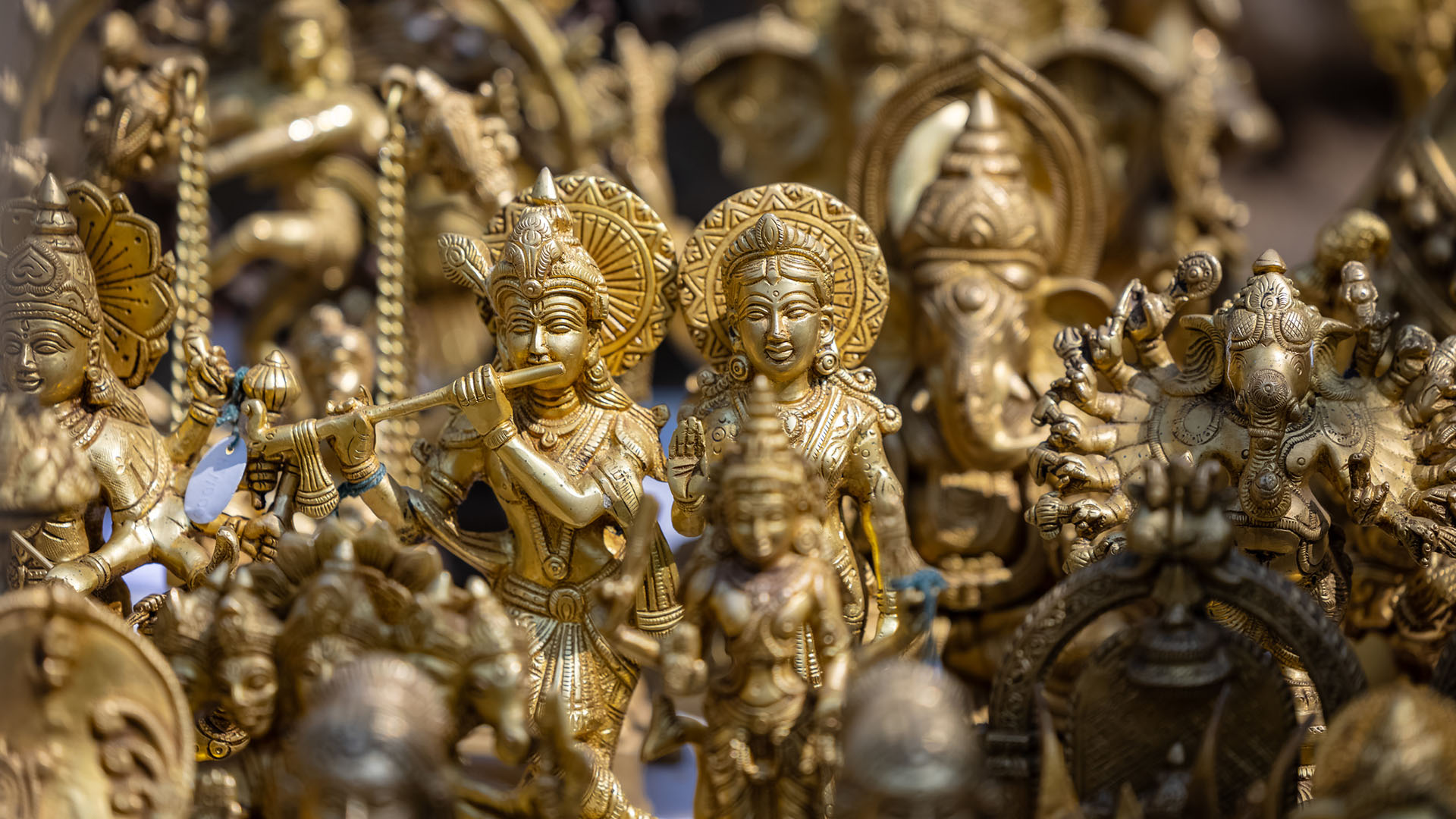
Some ancient forms of idol worship are more present than most people realize. Ancient religious symbols appear in yoga studios, wellness centers and suburban living rooms, often introduced gradually and framed as decorative or culturally appreciative. A statue of Ganesh sits on a desk as a good luck charm. Crystals are arranged according to principles drawn from animistic traditions. The practices feel innocuous, even sophisticated. They do not announce themselves as religious. That gradual normalization, the way things that would have been immediately recognizable as idol worship in any biblical context slide into mainstream Western life as aesthetics and wellness, is one of the more significant hidden-in-plain-sight realities of our cultural moment. The objects have not changed. The framing has.
The language of idolatry has been normalized in ways that are almost comic when you stop to notice them. A television program called American Idol ran for years without anyone blinking at the name. The show was built entirely around the elevation of human performance to the status of ultimate worth and the crowd’s adoration as the measure of that worth. The name was not ironic. It was accurate. And the fact that nobody found it alarming is itself the observation.
Stadium culture does the same thing with less self-awareness. Venues built to hold a hundred thousand people, rituals around game days that mirror religious practice, jerseys worn as devotion, athletes elevated to near-mythological status, and a language of ultimate loyalty that sounds remarkably like worship. None of this is a condemnation of sport itself. It is an observation about what sport can become when it fills the place in human life that was designed for something else.
The most pastorally urgent form of modern idolatry, and the one most likely to go unexamined among Christians specifically, is political identity. When a political party, movement or figure becomes the primary lens through which a person interprets reality, when loyalty to that identity shapes moral judgment more than Scripture does, when the defense of that identity produces more passion than the defense of the gospel, something has become an idol. Paul’s identification of greed as idolatry in Colossians 3:5 applies equally to any ultimate allegiance that displaces God from the center of a person’s life. Political idolatry is particularly difficult to recognize because it can feel like righteousness, like standing for what is right and opposing what is wrong. But the test is not whether the cause is good. The test is whether God or the cause occupies the throne.
The form changes across every era. The heart does not. The question Isaiah asked of the man warming himself with half a tree and worshiping the other half is the same question every generation faces: what are you trusting for what only God can give?
Naming these things is not meant to produce guilt. It is meant to produce clarity. The person who can see what they have been doing can also choose differently. And the freedom available on the other side of that clarity is one of the most practical gifts the gospel offers. You do not have to build your security around your political tribe or your career achievements or the approval of the people around you. There is a name above every name, and it belongs to the one who is actually worthy of what you have been giving to everything else.
The True God Is Different
Every idol in human history, whether carved from wood or built from status or reputation or wealth, shares one defining characteristic: it demands. The gods of the ancient world demanded sacrifice, ritual, appeasement and the offering of the most costly things their worshipers possessed. The modern idols of success and approval and security demand equally: they demand anxiety, compromise, endless striving and the subordination of everything else to their maintenance.
The true God is different in a way that should stop every reader cold.
False gods require sacrifice. The true God becomes the sacrifice. False gods demand the most valuable thing you possess. The true God gave the most valuable thing He possessed. False gods exalt themselves at the expense of their worshipers. Christ humbled Himself to the point of death so that His worshipers might be exalted. The Blood article in this series traced that thread from Eden to Calvary. The distinction it describes is not subtle. It is the most fundamental difference between the God of Scripture and everything else that has ever received human worship.
Philippians 2 captures it in language so precise that it deserves to be read slowly. The one who was in very nature God did not consider equality with God something to be used to His own advantage. He made Himself nothing. He took the form of a servant. He became obedient to death, even death on a cross. And then God exalted Him and gave Him the name above every name.
The idols demanded and took. The true God gave and descended. The worship the idols captured was always meant for the one who was willing to pay the cost the idols could only demand. That is the difference. And it is not a small one.
Not Fear but Freedom
The material in this article could generate fear. Understanding that real spiritual powers stand behind ancient idol worship, that child sacrifice was not directed at nothing, that the spiritual realm is more populated and more active than most modern Christians have been taught to believe, could leave a reader feeling exposed or anxious.
But the biblical posture toward all of this is not fear. It is clarity followed by freedom.
Paul’s instruction to the Corinthians about food offered to idols is instructive. He tells them the idol is nothing, that there is only one God, and that the food itself is not spiritually contaminated. But he also acknowledges that the sacrifices of pagans are offered to demons, and warns them not to participate in the table of demons. Both things are true simultaneously. The idol is nothing. What stands behind it is real. And the believer who understands both can navigate the world with clarity rather than confusion, with confidence rather than anxiety.
Colossians 2:15 is the pastoral anchor for everything the article has described. At the cross Christ disarmed the rulers and authorities and made a public spectacle of them, triumphing over them. The powers behind the idols, the shedim of Deuteronomy 32, the principalities and powers of Ephesians 6, the failed divine council members of Psalm 82, have been defeated. Their authority over the nations has been broken at the cross. The name above every name has been given to the one who made a public spectacle of every power that ever accepted worship that belonged to God.
The believer is not a spectator to a cosmic conflict of uncertain outcome. They stand on the winning side of a battle already decided, called to live in the freedom of that victory and to proclaim the name that every other name was always pointing toward.
This does not mean naivety. Scripture is clear that the defeated powers remain active, that the spiritual conflict is real and ongoing and that discernment matters. The next article in this series will address that directly. But it means that the right response to understanding the reality behind idols is not anxiety. It is worship. Directed, now with full clarity about what that means, toward the only One who was ever worthy of it.
The God Whom Idols Cannot Replace
What does the reality of idolatry reveal about God?
It reveals a God whose worth is so great that created spiritual powers have spent human history trying to redirect toward themselves the worship that belongs to Him. It reveals a God whose image is so significant that humanity and those powers have spent that same history attempting to replace it with lifeless substitutes. And it reveals a God whose response to all of that was not simply judgment, though judgment is real and coming, but rescue.
The nations were scattered at Babel. They were given over to spiritual powers that led them into corruption. They worshiped powers that were never worthy of what they were given and paid costs that no true God would ever ask of them. But God did not abandon the nations to the powers that had captured their worship. He called Abraham and began a rescue that would eventually reach every nation that had been scattered, every language that had been divided and every people that had been led astray, all through the Name above every name.
Humanity has never stopped worshiping. The question has never been whether we will worship. The question has always been whom we will worship.
The first commandment is not merely a prohibition. It is an invitation.
“You shall have no other gods before Me.”
Not because God fears rivals. Not because idols threaten His sovereignty. But because only the One who created us, who breathed His image into us and who gave His Son to rescue us from the powers that captured our worship is worthy of what we were created to give.
Scripture reveals another truth that completes the picture.
We become like what we worship.
Psalm 115 says of idols, “Those who make them will be like them, and so will all who trust in them.” Lifeless worship produces spiritual lifelessness. Worship directed toward the living Christ produces something entirely different. As Paul writes, “We all… are being transformed into his image with ever-increasing glory” (2 Corinthians 3:18). Worship never leaves the worshiper unchanged. It either shapes us into the likeness of what cannot save or transforms us into the likeness of the One who can.
God is not merely revealing information.
He is revealing Himself.
“For although there may be so-called gods in heaven or on earth (as indeed there are many ‘gods’ and many ‘lords’), yet for us there is but one God, the Father, from whom all things came and for whom we live; and there is but one Lord, Jesus Christ, through whom all things came and through whom we live.” (1 Corinthians 8:5-6)
The more carefully we read Scripture, the more we discover that idols were never the true competition. The carved image was never the real rival. Even the powers that stood behind them have never been a match for the One above every name.
From Eden to Babel, from Abraham to Sinai, from the prophets to the cross, Scripture tells one continuous story. Humanity was created to know God, to bear His image and to worship Him alone. Every false god is a counterfeit. Every idol is a substitute. Every competing name eventually fades.
Every competing name eventually fades. But the Name above every name is the only Name by which every nation will finally know the God they were created to worship.