What Is in a Name
Hidden in Plain Sight: The Name of God
Most readers of the Bible have encountered the word LORD thousands of times without stopping to ask what they are actually reading.
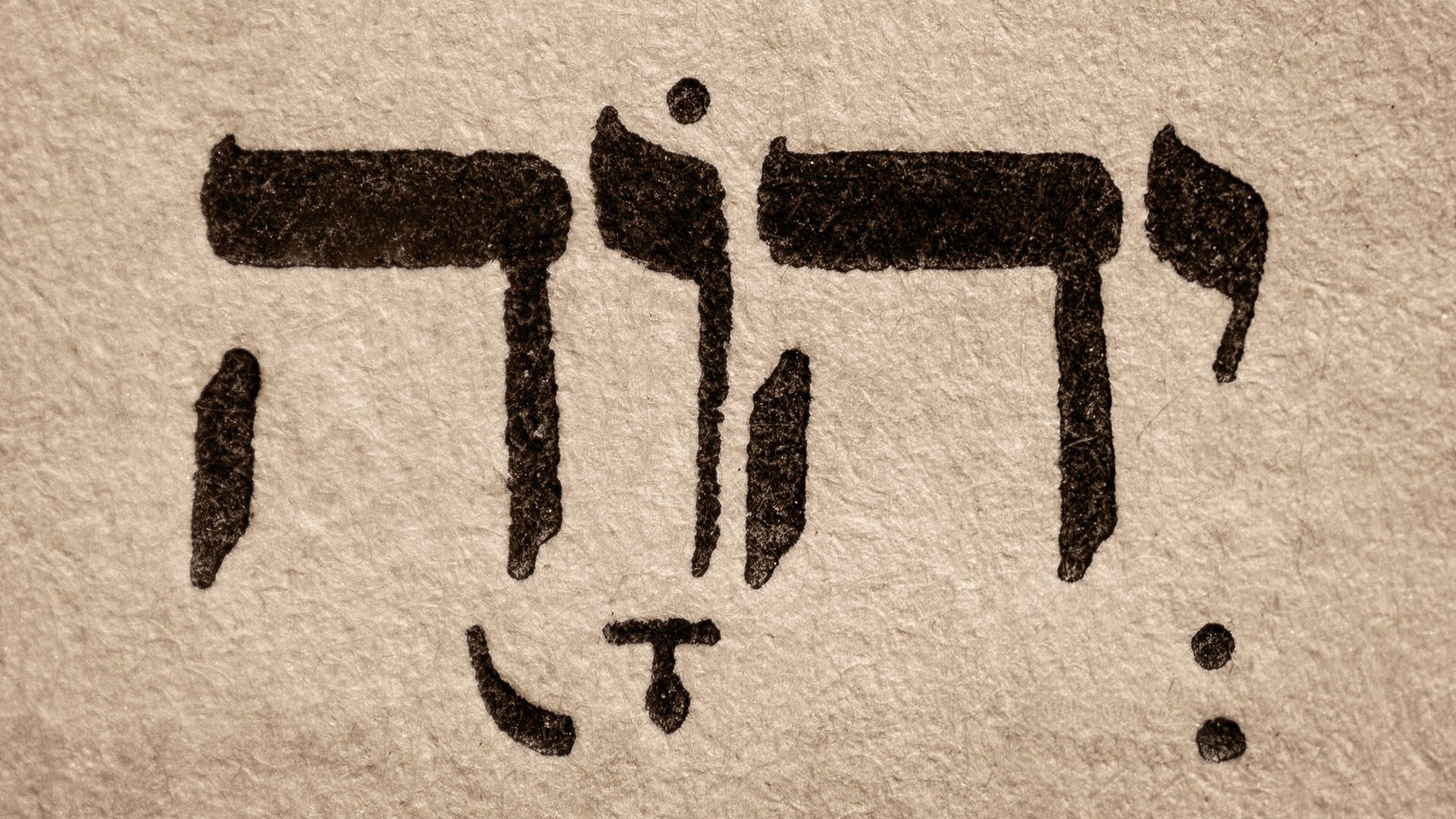
That word, printed in small capital letters in most English Bibles, is not a translation. It is a substitution. It stands in for a specific name, a personal name that God spoke to Moses at a burning bush and declared to be His name forever. Most English readers have never heard it spoken, never understood what it means and almost never noticed that it has been hiding in plain sight on nearly every page of their Old Testament, appearing 6,828 times in the Hebrew Bible, more than all other divine names combined.
But the name hidden behind LORD is only part of the story. From the opening chapters of Genesis to the throne room of Revelation, another thread has been quietly running through Scripture: the thread of the Name. Whose name will be exalted? Who will make a name, and how? Where does God place His name? The Hidden in Plain Sight series has been tracing this thread from its earliest articles without ever stopping to examine it directly. This article does that.
A Name Is Never Just a Label
Before tracing the divine names, one foundational observation needs to be established, because without it the rest of the article will not carry its full weight.
In modern culture a name identifies. It distinguishes one person from another, useful and necessary but not particularly revelatory. In Scripture a name reveals. To name something is to know it, to declare something true about it and to stand in a particular relationship with it. God brings the animals to Adam and Adam names them, an act of understanding and authority. God renames Abram to Abraham, Sarai to Sarah, Jacob to Israel and Simon to Peter. Each renaming marks a turning point in the person’s story and a disclosure of who God is making them to be.
This is why the Bible speaks of dwelling in God’s name, calling on His name, trusting His name, profaning His name and bearing His name. The name carries the person. Where the name is, the one named is present in some sense. And this is what makes the divine names so significant. Throughout Scripture, God does not reveal His name simply so people will know what to call Him. He reveals His name so they will know who He is. The names are not vocabulary. They are revelation, each one God disclosing an aspect of His character and presence to people who need to know Him in exactly that way at exactly that moment.
The Thread Running Through the Series
Readers who have followed this series will recognize something in what we are about to trace. The name thread has been present from the beginning.
In the Cain article we noticed that after murdering his brother and being sent away from God’s presence, Cain builds a city and names it after his son, a man establishing his own legacy and seeking permanence apart from God. In the Nephilim article we traced the Hebrew phrase anshei ha-shem, usually translated “men of renown” but more literally “men of the name,” humanity before the flood defined by its pursuit of greatness on its own terms. At Babel the thread became explicit: “Come, let us build ourselves a city, with a tower that reaches to the heavens, so that we may make a name for ourselves.” The Hebrew word is shem. Name. An entire civilization gathered around the project of self-exaltation.
Then in the very next chapter God answers Babel. He calls Abraham and says: “I will make your name great.” The same Hebrew word. One name is seized through human ambition. The other is given through divine promise. Then in the Angel of the Lord article we found the thread again in one of the most extraordinary statements in the Old Testament. Of the Angel who goes before Israel, God says: “My Name is in him.” The name is the presence. The name is the identity.
What we have been tracing without naming is the spinal cord of the biblical story. The question running from Cain’s city to the throne room of Revelation is always the same: whose name will be exalted?
Elohim: The God Who Creates
The first name the Bible uses for God is Elohim, appearing in the very first sentence: “In the beginning God created the heavens and the earth.” (Genesis 1:1) Elohim is the plural form of El, the generic Semitic word for God or divine being. Its plural form when used of the God of Israel is not a statement of multiplicity but of fullness and majesty, the name of creative power and sovereign authority, the God who speaks worlds into existence by the power of His word alone.
Elohim is used over 2,000 times in the Old Testament and readers of the Divine Council article will recognize it as the category word for spiritual beings, which is why Psalm 82 can describe God presiding in the assembly of the elohim. The same word that names the Creator names the category of spiritual beings He created. Every spiritual being is an elohim, but not every elohim is YHWH. The distinction is not the word but who inhabits it, and no elohim inhabits it as its maker and sovereign the way the God of Israel does. Elohim is the name of God as He relates to all of creation. Every human being, whether they know His covenant name or not, lives under His authority, inhabits the world He spoke into existence and bears the image He gave.
El Roi: The God Who Sees
El Roi is the only divine name in the entire Old Testament given to God by a human being rather than revealed directly by God. Readers of the Angel of the Lord article will remember Hagar in the wilderness, the Egyptian slave woman who encountered the Angel of the Lord at a desert spring. After He spoke to her and promised her a son, she responded with a declaration: “You are the God who sees me.” El Roi. The God who sees.
She is the first person in Scripture to give God a name, and that name comes entirely from her experience of being found when no one else was looking. She was not a patriarch or a prophet. She was a foreign slave woman alone in the desert, and God saw her. El Roi does not appear many times in the Old Testament. It does not need to. It appears once, given by one person in one moment of desperate isolation, and it carries more pastoral weight than almost any other name in Scripture. The God who created everything with a word, before whom the nations are as a drop in a bucket, saw one unnamed slave woman at a desert spring and found her worth visiting. When Hagar names God El Roi, the God who sees me, she is not inventing a label. She is declaring something she has discovered to be true.
El Shaddai: God Almighty
The name El Shaddai appears for the first time in Genesis 17:1, and the moment of its revelation matters as much as the name itself. Abraham is ninety-nine years old. The covenant promise of a son through Sarah has not been fulfilled. Everything about the situation is humanly impossible. Then God appears and says: “I am God Almighty, El Shaddai. Walk before me faithfully and be blameless.”
The precise meaning of Shaddai is debated among scholars. It may be connected to the Hebrew word for mountain, suggesting overwhelming power, or to a root meaning sufficiency and nourishment. What is clear is that God chose this name at the precise moment when the covenant required something beyond human possibility. The name fits the moment: this is the God for whom nothing is too hard, whose promises do not depend on human capacity to fulfill them.
A pattern emerges here that runs through every divine name revelation. God does not reveal a new name arbitrarily. He reveals the name His people need at the moment they need it. Abraham needs the impossible, so God comes as El Shaddai. Hagar needs to be seen, so God comes as El Roi. Moses needs assurance of presence, so God comes as YHWH, I will be with you. El Shaddai becomes the characteristic name of God in the patriarchal narratives, associated with covenant blessing and miraculous provision. It is the name you call on when the situation is beyond your control and the promise is too important to abandon.
El Elyon: God Most High
El Elyon, God Most High, appears first in one of the most mysterious encounters in all of Genesis. After Abraham’s defeat of the four kings, a figure named Melchizedek appears, king of Salem and priest of El Elyon. He brings out bread and wine, blesses Abraham in the name of El Elyon, possessor of heaven and earth, and Abraham responds by giving him a tenth of everything. The encounter is brief, unexplained and theologically dense, and Hebrews will later spend considerable attention on Melchizedek.
El Elyon means the Most High God, the exalted One whose sovereignty is supreme above every other power. Readers of the Divine Council article will recognize why this name carries such weight in the series. The Old Testament acknowledges a populated spiritual realm, heavenly beings of different kinds, rulers and authorities in the unseen world that the nations have worshiped and feared across history. Above every single one of them stands El Elyon. The nations worshiped many powers. Scripture acknowledges many heavenly beings. But there is only one Most High, and that is not the description of the strongest among many. It is a declaration of absolute uniqueness. El Elyon is not the winner of a cosmic competition. He is the One above whom there is nothing.
YHWH: The Name He Keeps Forever
Everything the series has traced about the name thread arrives at this moment. Moses is at the burning bush. God has just commissioned him to go to Pharaoh and lead Israel out of Egypt. Moses asks what to say when the Israelites ask God’s name. And God’s answer is one of the most studied phrases in all of Scripture: “I Am Who I Am. This is what you are to say to the Israelites: I Am has sent me to you.” Then immediately: “The Lord, the God of your fathers, the God of Abraham, the God of Isaac and the God of Jacob, has sent me to you. This is my name forever, the name you shall call me from generation to generation.” (Exodus 3:14-15)
The name behind LORD is YHWH, the four Hebrew consonants known as the Tetragrammaton. By the Second Temple period the name had become too sacred to speak aloud. In prayer Jews substituted Adonai, my Lord. In conversation, HaShem, the Name. The High Priest spoke it once a year on Yom Kippur in the Most Holy Place. Every other time it appeared in the text it was read around. Most English readers have never once heard the name their Bible contains nearly 7,000 times.
The Hebrew ehyeh asher ehyeh can be rendered I Am Who I Am or I Will Be What I Will Be. The philosophical reading emphasizes God’s self-existence and eternal being. The narrative reading emphasizes something equally important: I will be with you. The Israelites languishing under Pharaoh did not need a lecture on divine ontology. They needed to know that God was present, that He had not forgotten them and that the One sending Moses would be with them through everything coming. YHWH is the name of covenant faithfulness and redemptive presence, the name God uses when He acts as the God of His people. Every time a reader sees LORD in small capitals in their English Bible, they are encountering this name. It is the name of the God who comes.
The Names Israel Discovered
Once YHWH was revealed as God’s personal covenant name, something remarkable began to happen throughout Israel’s story. When God showed up in a new way at a decisive moment, Israel responded by joining a descriptor to His name, preserving what they had discovered about Him.
After God provides a ram as Abraham’s knife is raised over Isaac, Abraham names the place YHWH-Jireh, the Lord will provide. It is more than gratitude for a specific rescue. It is a theological declaration: this is what God does. He provides what He requires. Readers of the Blood article will recognize the depth of that moment. After Israel’s victory over the Amalekites, Moses builds an altar and names it YHWH-Nissi, the Lord is my banner. Israel’s victories are not ultimately its own achievement. And the prophet Ezekiel closes his entire book with the name YHWH-Shammah, the Lord is there, given to the restored city of God in his final vision. After chapters of exile, judgment and the departure of God’s glory from the temple, the book ends with a name that is also a promise: wherever God’s people finally dwell in the fullness of restoration, the defining characteristic of that place will not be its architecture or its prosperity. It will be His presence.
Where God Places His Name
Once YHWH is revealed, the question of where God places His name becomes one of the defining themes of the rest of the Old Testament. Deuteronomy returns again and again to a specific phrase about the place God will choose for worship: the place where He causes His name to dwell. Not the place where He lives, as though He could be contained in a building. Not the place where His image stands. The place where His name dwells. The tabernacle and temple are places where His name has been planted, where the covenant relationship between YHWH and His people has a physical, geographic center.
Now pause here, because what comes next is one of the most striking contrasts in all of Scripture. The nations made images to represent their gods. They carved stone, shaped metal and created visible forms to stand for the divine presence they were reaching toward. They asked what their gods looked like and made the answer with their hands. God did something entirely different. He placed His name in the world. And before He placed His name in the tabernacle, He had already placed His image in creation. It was not carved from stone or shaped from metal. It breathed. It bore His likeness. It was humanity, made in His image and placed in His world as His living representation. The nations asked what their gods looked like and carved the answer. God asked what He looked like and pointed at a person.
Bearing the Name
The thread of God’s name in Scripture runs in two directions simultaneously, and the second direction is the one most readers have never noticed. We have traced the human movement toward God through the name He has revealed. But there is an equally powerful movement running the other direction: God placing His name on His people.
Numbers 6 contains the priestly blessing and what follows gives it its full theological weight: “So they will put my name on the Israelites, and I will bless them.” (Numbers 6:27) The priests do not merely speak words over the people. They place the name on them. To bear the name is to represent the One whose name you bear. Jeremiah carries the thread forward when God speaks of “the people who are called by my name.” The name is not merely something Israel calls on. It is something Israel is called by. By the time of the early church, name-bearing has become a defining characteristic of the community of believers: people baptized, gathered, healed and sent in the name.
Then Revelation brings the thread to its completion. In John’s final vision of the new creation: “His servants will serve him. They will see his face, and his name will be on their foreheads.” (Revelation 22:3-4) The name God placed on Israel through the priestly blessing, and that the church bore through the centuries, is written permanently and visibly on the people of God in the new creation. The journey from Numbers 6 to Revelation 22 is the journey from a blessing spoken over a people in the wilderness to a name written forever on those who dwell in God’s presence. The story is not only about people calling on God’s name. It is about God placing His name on His people.
Calling on the Name
Running alongside the story of God placing His name on His people is another thread: people calling on the name of the Lord. It begins in Genesis 4:26, after Seth is born and his son Enosh arrives: “At that time people began to call on the name of the Lord.” The phrase appears immediately after the violent, civilization-building line of Cain. Two lines emerge from Genesis 4. One builds cities and seeks its own name. The other calls on God’s.
Abraham builds altars and calls on the name throughout his journeys. The patriarchs carry the practice forward. The psalms are saturated with it. Then Joel speaks a word that reaches across centuries: “Everyone who calls on the name of the Lord will be saved.” (Joel 2:32) Peter quotes that verse at Pentecost. Paul quotes it in Romans. The thread that began with Seth’s generation in Genesis reaches across the entire Old Testament and arrives in the New as the language of salvation itself. Calling on the name is not merely a religious practice. It is the posture of a creature toward its Creator, of a broken humanity reaching back toward the One whose name it was made to bear.
The Name Above Every Name
The shem thread that began with Cain naming a city after his son finds its destination in one of the most carefully constructed passages in Paul’s writing: “Therefore God exalted him to the highest place and gave him the name that is above every name, that at the name of Jesus every knee should bow, in heaven and on earth and under the earth, and every tongue acknowledge that Jesus Christ is Lord, to the glory of God the Father.” (Philippians 2:9-11)
The name above every name is not simply the greatest title in a hierarchy of titles. It is the culmination of the biblical story of the Name. The three realms Paul names are not decorative parallelism. They form a comprehensive declaration that every category of being this series has discussed bows at this name: in heaven the heavenly beings of the Divine Council and every spiritual power; on earth every human being from every nation Babel scattered; under the earth every power that has set itself against God’s purposes. Not one realm and not one name stands outside this declaration.
Babel said let us make a name for ourselves. God answered Abraham: I will make your name great. The nations pursued their own names and gave the names of their gods to powers that were never worthy of them. And at the culmination of the biblical story, the Name spoken at the burning bush and declared forever is brought into full light in the Son. Jesus said He had come in His Father’s name. He said He had manifested the Father’s name to those given to Him. YHWH, the God who will be with His people, came to be with His people. Not in a pillar of fire or a burning bush but in a person, in a name spoken over a child in Bethlehem that gathered into itself everything the divine names had been revealing since the beginning.
The God Who Speaks His Name
What does the Name of God reveal about God? It reveals a God who has not remained anonymous. He did not create the world and retreat into silence. He spoke His name into history at specific moments, to specific people facing specific impossibilities, and each revelation was an act of self-disclosure rather than mere identification. To Abraham facing the impossible He said I am El Shaddai. To Hagar alone in the desert He became El Roi. Above every created power He reigns as El Elyon. To Moses at the burning bush He declared His name forever. To His people He placed His name upon them through blessing and called them by it. And in the fullness of time He gave the world the Name above every name.
The names accumulate. They do not replace one another. The God who created with the power of Elohim is the same God who makes the impossible possible as El Shaddai, who sees the overlooked as El Roi, who reigns supreme as El Elyon and who enters covenant as YHWH. Each name is a facet of the same God, revealed as His people needed to know Him, building toward a fullness no single name could contain. Humanity has spent history building names that fade. God has spent history revealing the Name that saves.
God is not merely revealing information. He is revealing Himself.
“The name of the Lord is a fortified tower; the righteous run to it and are safe.” (Proverbs 18:10)
The more carefully we read Scripture, the more we discover that the name thread has been running beneath the surface of the whole story. Cain sought a name. Babel sought a name. The men of renown were men of the name. Abraham received a name. Moses was given the Name. The Angel carried the Name. The temple held the Name. The priests placed the Name on the people. The church bore the Name. And at the end of all things, every knee bows at the Name and the name of God is written on the foreheads of those who dwell in His presence forever. It was never about which name would survive. It was always about which Name was true.