The Work Behind the Holidays
Hidden in Plain Sight: Between the Cross and the Empty Tomb
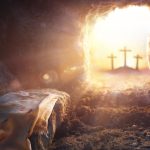
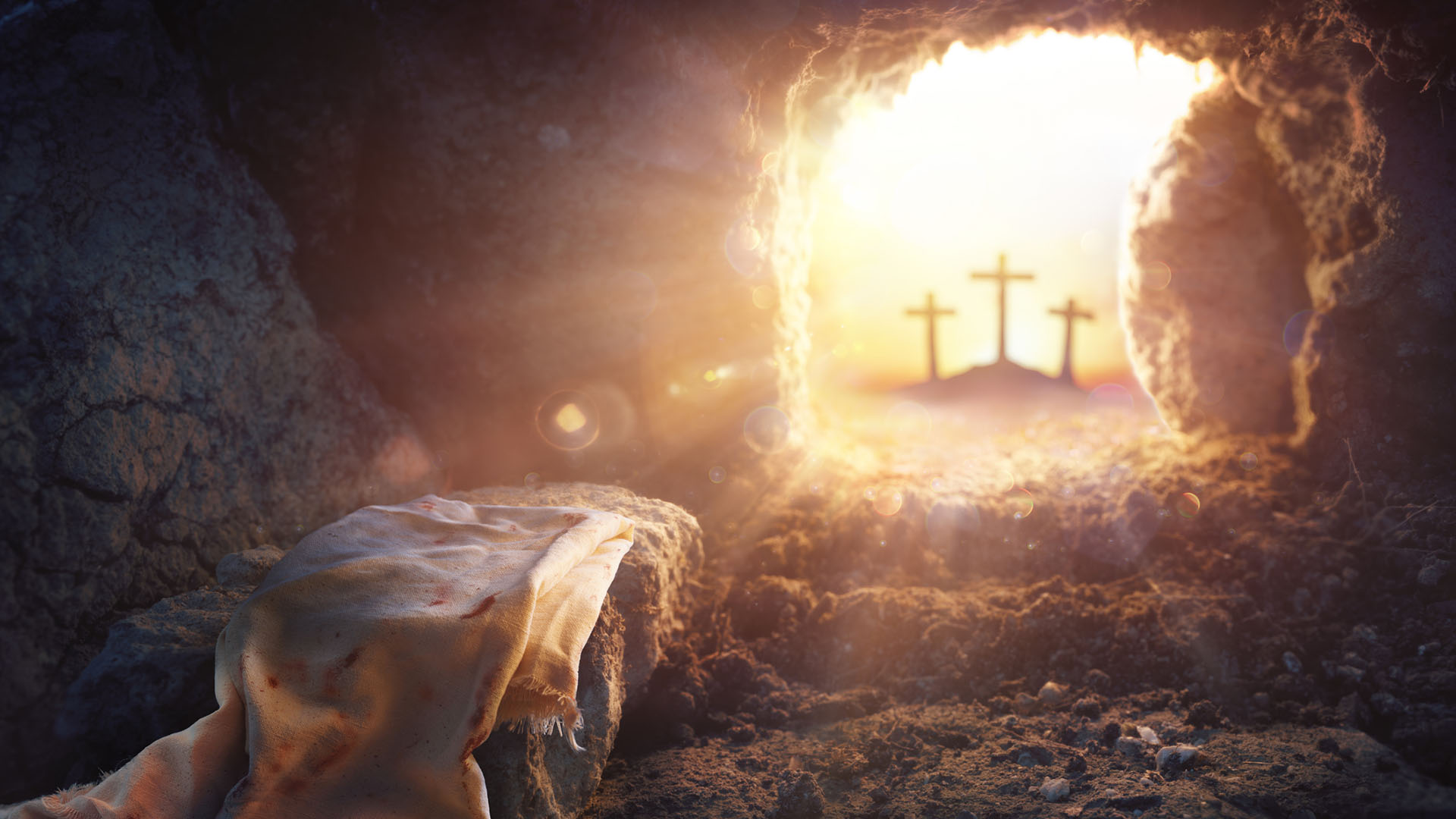
We remember Good Friday. We celebrate Easter Sunday. But we often pass quickly over the time in between, treating it as a pause in the story rather than part of it. The cross accomplished something. The empty tomb declared something. And the question hiding in plain sight between them is this: what was God doing while the world believed nothing was happening?
Scripture does not answer that question completely. But it answers it far more fully than most readers have noticed. And what it reveals changes how the entire biblical story is understood, including every thread this series has been following since the garden.
When Creation Recognized the King
The crucifixion was not witnessed only by people. Creation itself responded, and the response was not incidental.
Darkness fell over the land from noon until three in the afternoon. The connection to the first Passover, when darkness covered Egypt before deliverance came, is difficult to ignore. Amos had written centuries earlier: “I will make the sun go down at noon and darken the earth in broad daylight.” (Amos 8:9) Now during Passover, at the moment the Passover lamb was being sacrificed, darkness covered the land as something far greater than Egyptian deliverance was taking place.
Then the veil of the temple was torn from top to bottom. Not from the bottom up, as a person would tear it, but from the top down, as God would. That veil had separated sinful humanity from the presence of a Holy God for centuries. Only the high priest could pass through it, and only once a year on Yom Kippur, carrying blood for atonement. When Jesus died, God tore it. Hebrews explains what the tearing meant: a new and living way had been opened into the Most Holy Place through the body of Christ. The barrier was gone. Access had been restored.
The earth shook. Throughout Scripture the earth trembles when God reveals His presence, at Sinai, in the psalms, in the prophets. At the cross, creation bore witness to what was happening. And then Matthew records something that stops every careful reader: the tombs broke open and many holy people who had died were raised to life after Jesus’ resurrection and appeared to many people in Jerusalem. The prophets had spoken of opened graves and the defeat of death. Isaiah declared that God would swallow up death forever. Ezekiel described graves being opened. Now the first signs that those promises were beginning to be fulfilled were appearing in the streets of Jerusalem. Even the graves testified. The creation was not watching passively. It was responding to the most significant event in its history.
The Passover That Fulfilled Every Passover
Nothing about the timing of the crucifixion was accidental. Jesus died during Passover, at the very hour the Passover lambs were being slaughtered in the temple courts. John the Baptist had identified Him at the beginning of His ministry: “Look, the Lamb of God, who takes away the sin of the world.” (John 1:29) Paul stated it plainly: “Christ, our Passover lamb, has been sacrificed.” (1 Corinthians 5:7)
But the original Passover was never the final word. It was a shadow pointing forward to something greater. Egypt was never the final slavery. Pharaoh was never the final enemy. The blood on the doorposts pointed toward blood that would accomplish what lamb’s blood could only preview. And Isaiah had already expanded the scope beyond what any first-century reader might have expected: “He will sprinkle many nations.” Not one nation. Many nations. The Savior of Israel had come for the world. Every Passover celebrated across the centuries had been pointing toward this moment without those celebrating it fully understanding what they were pointing toward.
The Burial That Revealed the King
Even the burial of Jesus contained a hidden confirmation of who He was. He was born in humble circumstances, lived without wealth, owned very little and died the death of a criminal. Yet His burial was remarkable. Joseph of Arimathea, a prominent member of the council, came forward and offered a new tomb. Nicodemus, who had come to Jesus by night early in the ministry, came forward with an extraordinary quantity of myrrh and aloes. The preparation was costly and careful.
Isaiah had written seven centuries earlier: “He was assigned a grave with the wicked, and with the rich in his death, though he had done no violence, nor was any deceit in his mouth.” (Isaiah 53:9) A criminal’s death. A rich man’s burial. Both in the same sentence. Both fulfilled in the same weekend. The burial did not simply mark the end of the story. It confirmed that the One buried was exactly who He claimed to be.
The Work Accomplished in the Grave
This is where Scripture invites careful attention without providing a complete chronology. What happened between the moment of death and the moment the stone was rolled away is one of the genuine mysteries the series has been honest about throughout. But it is not an empty mystery. Scripture gives us specific glimpses and they are extraordinary.
The cross itself accomplished something in the spiritual realm before the resurrection. Paul writes in Colossians 2:15 that Christ disarmed the powers and authorities and made a public spectacle of them, triumphing over them by the cross. Not by the resurrection. By the cross. The powers that had held humanity in bondage since the fall, the same spiritual forces this series has traced from the Divine Council through the Idols and Curses articles, were publicly disarmed at the very moment that looked like their greatest victory. The darkness that fell over the land was not the darkness winning. It was creation responding to the moment the darkness was broken.
Peter writes that Christ went and made proclamation to imprisoned spirits who disobeyed long ago in the days of Noah. This is one of the most debated passages in the New Testament and the series posture of humble curiosity applies here as strongly as anywhere. But one thing is clear about the nature of that proclamation. The word Peter uses is not euangelizo, the word for preaching the gospel. It is kerusso, the word for a herald announcing a king’s victory. A herald does not offer. A herald declares. Christ proclaimed to the imprisoned spirits not an offer of salvation but the announcement of a verdict already rendered. The powers that had been in rebellion since before the flood heard from the Victor Himself that the rebellion was over.
Ephesians 4:8-10 adds another dimension. Paul quotes Psalm 68, describing Christ ascending on high and leading captives in His train. The imagery draws from the ancient Near Eastern practice of a victorious king parading conquered enemies through the city streets. Those who had been held captive were led free. The powers that had held them were placed on display as defeated foes. Paul frames the descent into the lower regions and the ascent as a single movement of cosmic victory, Christ going down into the domain of death and coming up having stripped it of its authority.
These passages do not give us a detailed chronology of three days. What they give us is a picture of a Victor who was never passive. The grave was not a pause. It was part of the triumph.
Every Thread Arrives Here
This is the article the entire Hidden in Plain Sight series has been building toward, because every thread the series has followed since the garden arrives at the cross.
The serpent struck His heel in the garden and God spoke the first promise: the offspring of the woman would crush the serpent’s head. At the cross that promise was fulfilled. The heel was struck. The head was crushed. The rebellion that entered creation through a conversation in a garden was answered through a death outside a city wall.
The blood thread that began with the garments of skin in Eden, that ran through Abel’s offering, through the Passover lamb, through the entire sacrificial system of Israel, arrived at its destination at Calvary. The God who provided what He required provided the ultimate provision at the cost of His own Son. Every animal that ever died on Israel’s altars was pointing here. The Cost of Covering article traced that thread from the beginning. Here is where it ends.
The Divine Council article established that the spiritual powers allotted to the nations had failed in their assignment and were under judgment. Psalm 82 ended with a prayer: rise up, O God, judge the earth. At the cross that judgment was enacted and the powers were publicly disarmed. The nations that had been scattered at Babel and given over to spiritual powers were now being called back through the proclamation of the gospel to every tribe and language and people.
The Name of God article traced the shem thread from Cain’s city through Babel through Abraham to the Name above every name. At the cross, Philippians 2 tells us, the obedience that reached its climax in death on a cross was the act for which God exalted Christ and gave Him the Name above every name. The name the serpent promised Eve she could have by taking, the status she could seize by reaching outside of God’s provision, was given freely to the One who humbled Himself completely.
The Angel of the Lord article asked who the figure was who appeared throughout the Old Testament carrying God’s name, silencing accusers, providing covering and going before His people. Zechariah 3 showed Him standing in the heavenly assembly declaring Joshua’s sin taken away. At the cross that declaration became permanent and cosmic. The covering provided in preview in the heavenly assembly was accomplished finally and completely for every person who would ever stand before God’s justice.
Every road this series has traveled leads here. Every hidden thread points toward this weekend. The cross was not an interruption of the story. It was the point toward which the whole story had been moving since the serpent first appeared in the garden.
What They Had Not Heard They Understood
Isaiah wrote something extraordinary about the scope of what the Servant of the Lord would accomplish: “For what they were not told, they will see, and what they have not heard, they will understand.” (Isaiah 52:15) Nations who had never heard the story of Israel would see and understand something that the people who had the story had missed.
That pattern played out on the road to Emmaus. Two disciples were walking away from Jerusalem, devastated, their hopes apparently buried with Jesus. The risen Christ joined them and beginning with Moses and all the Prophets, He explained what the Scriptures had always been saying about Him. Then He opened their minds so they could understand. The answers had always been there. The prophets had spoken. The promises had been made. The signs had been given. Understanding required revelation.
That is perhaps the greatest lesson hidden within these three days. The darkness testified. The temple testified. The earth testified. The grave testified. The prophets testified. The buried King emerged victorious and everything creation had been pointing toward since the beginning was declared true. Jesus Christ is Lord. Death has been defeated. The powers have been disarmed. The captives have been led free. The Name above every name has been given to the One who descended into the lowest place and rose from it victorious.
The mystery remains, as it should, because God has allowed it to remain. The things He has revealed belong to us. The things He has concealed belong to Him. And one day all things will be revealed. Until then we continue searching the Scriptures. We continue walking the road to Emmaus. And we continue asking Christ to do what only He can do.
Open our eyes.
The God Who Entered the Grave
What do these three days reveal about God?
They reveal a God who does not observe from a distance. When the problem was death itself, He entered death. When the enemy needed to be defeated, He went into the enemy’s territory and walked out victorious. When the powers needed to be disarmed, He allowed them to do their worst and then stripped them of everything they used to do it. When the captives needed to be freed, He descended to where they were held.
After the resurrection, Jesus declared: “I am the Living One. I was dead, and now look, I am alive for ever and ever! And I hold the keys of death and Hades.” (Revelation 1:18) The keys were taken. Not borrowed. Not negotiated. Taken by the One who has authority over everything He entered.
The empty tomb was not the beginning of Christ’s victory. It was the public declaration that the victory was complete. The grave could not hold Him. Death could not keep Him. The King had entered the grave and emerged victorious, and nothing in the universe has been the same since.
God is not merely revealing information. He is revealing Himself.
“Where, O death, is your victory? Where, O death, is your sting? The sting of death is sin, and the power of sin is the law. But thanks be to God! He gives us the victory through our Lord Jesus Christ.” (1 Corinthians 15:55-57)
The more carefully we read Scripture, the more we discover that these three days were not a gap in the story. They were its center. Every article in this series has been circling this moment. Every hidden thread has been pointing here. The serpent struck His heel. The heel crushed the serpent’s head. And the stone that was rolled away from the tomb revealed not simply an empty grave but the beginning of a new creation, one in which death has been defeated, the powers have been disarmed, every name has bowed, and the God who conceals and reveals has made Himself finally and fully known.