The Assembly of Heaven
Hidden in Plain Sight: The Divine Council
In recent years a teaching called the Courts of Heaven has become widely popular in certain Christian circles. It holds that believers can access a heavenly courtroom through prayer, present their case before God as a legal proceeding, respond to accusations from the enemy and secure spiritual verdicts that affect their circumstances on earth. For many people this teaching was their first encounter with the idea that the heavenly realm has something like a judicial assembly, a structured gathering of divine beings before God where consequential things happen.
The instinct behind that hunger is not wrong. Scripture does describe a heavenly assembly. It does use courtroom language for what happens there. The spiritual realm is real and active and consequential in ways most modern Western Christians have been poorly equipped to understand.
But the Courts of Heaven teaching, whatever its merits, is not the starting point. Scripture is. And what Scripture actually says about the heavenly assembly is more grounded, more surprising and more pastorally significant than most versions of the teaching convey. It has been hiding in plain sight across multiple books of the Bible, waiting for anyone willing to read carefully enough to see it.
The Word That Creates the Problem
Psalm 82 opens with a statement that has made careful readers uncomfortable for centuries.
“God has taken his place in the divine council; in the midst of the gods he holds judgment.” (Psalm 82:1)
The Hebrew word translated “gods” here is elohim, the same word used throughout the Old Testament for the one true God of Israel. Most English translations handle the tension by rendering the first elohim as “God” and the second as “gods” or “divine beings” or even “rulers,” but the Hebrew text uses the same word twice in the same sentence. God presides in the assembly of elohim. He holds judgment in the midst of the elohim.
Many readers’ first instinct is to assume the elohim of the assembly must be human judges or rulers, since any other reading seems to imply polytheism. But the psalm’s own argument resists that reading. God tells these elohim they will die like mortals, like any prince they will fall. If they were already human, that statement would carry no weight. You do not threaten a human being with dying like a human being. The force of the sentence requires that the elohim being addressed are something other than mortal, something that would not naturally die, whose mortality is a judgment rather than a given.
What Psalm 82 is describing is not polytheism. It is something the Bible assumes from its earliest pages and rarely stops to explain: that God presides over an ordered assembly of heavenly beings, that He holds them accountable for how they exercise whatever authority He has granted them and that He alone stands as judge over all of them. Understanding this does not undermine biblical monotheism. It deepens it.
What Elohim Actually Means
The confusion around Psalm 82 comes largely from assuming that elohim is a name rather than a description of a category of being.
In Hebrew, elohim functions more like a title than a proper noun. It describes beings who inhabit the spiritual realm rather than the physical one. Yahweh is elohim. The beings of the heavenly assembly are elohim. The spirits of the dead are occasionally called elohim in the Old Testament. The word describes the nature of a being, its location in the cosmic order, not its rank or power. What distinguishes Yahweh from every other elohim is not the category He belongs to but who He is within it. He is incomparable, uncreated, sovereign over all others, the judge before whom every other being in the spiritual realm will one day answer.
Biblical monotheism does not require that only one spiritual being exists. It requires that only one spiritual being is worthy of worship, only one holds ultimate sovereignty, only one created everything else and holds all things in His hand. Scripture is entirely consistent on this point. The existence of other spiritual beings no more threatens God’s uniqueness than the existence of other rulers threatens the authority of the king who appointed them.
It is worth pausing here to notice how different the Divine Council is from every human council ever assembled, and also what human councils reveal about the God who governs differently from all of them.
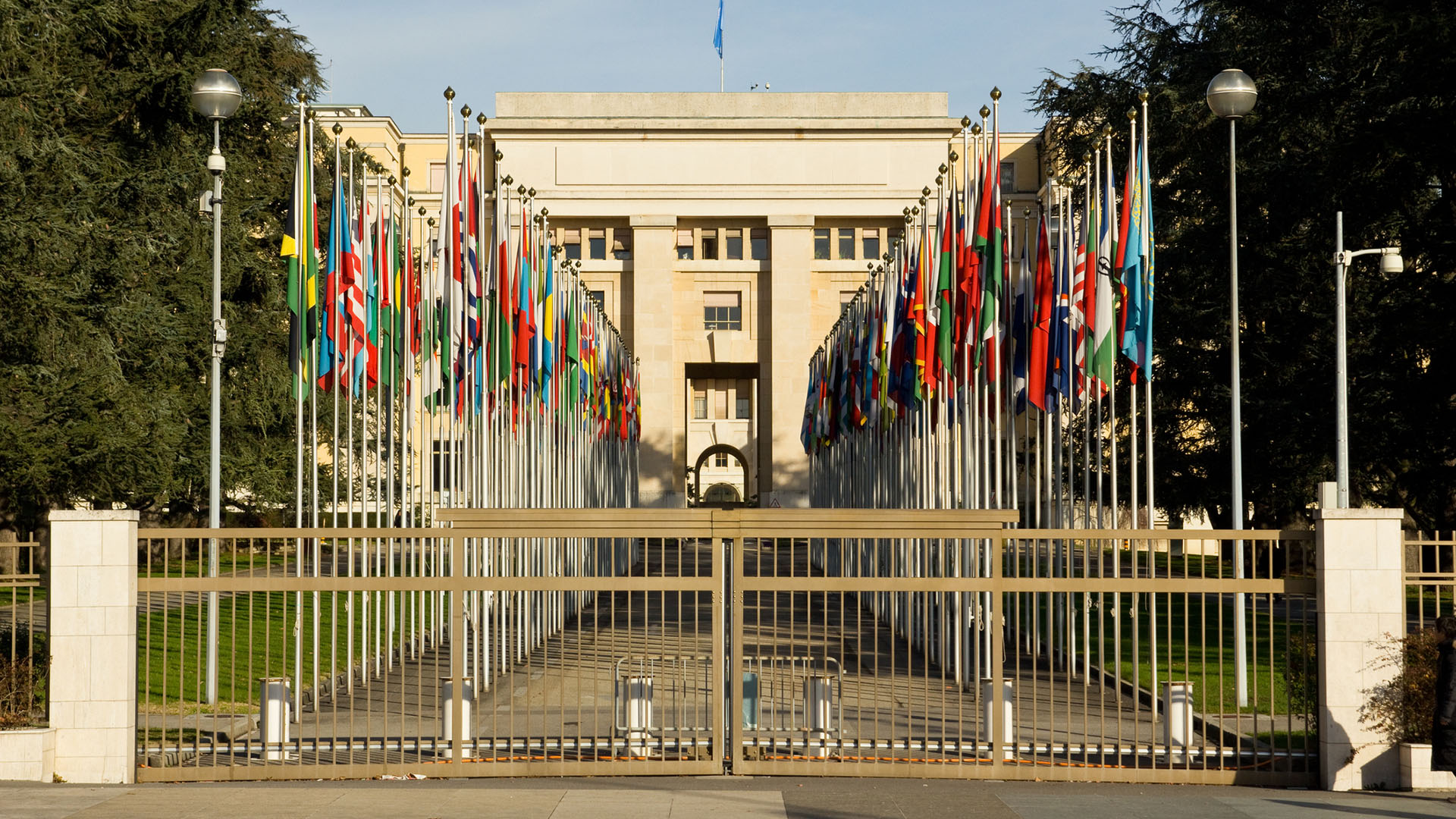
Human beings build councils because we have to. No single person has complete knowledge, complete wisdom or complete authority, so we gather advisors, deliberative bodies and systems of accountability to compensate for what any individual lacks. The United Nations assembles representatives of every nation in a chamber precisely because no single nation has the right or the wisdom to govern all the others unilaterally. International courts exist because justice requires a hearing, evidence and a verdict rendered by something larger than one person’s judgment. Human councils, at their best, are attempts to approximate something we instinctively know governance requires: deliberation, accountability and authority that transcends individual self-interest.
That instinct is not accidental. We build councils because we were made in the image of a God who governs through one, and because something deep in human consciousness knows that unchecked unilateral power is wrong. Every parliament, every court, every deliberative assembly in human history is a dim and imperfect reflection of something God built into the structure of reality itself.
But human councils consistently fall short of what they aspire to, because the beings in those chambers are fallen, self-interested and without the sovereign authority to enforce what they declare. The United Nations can pass resolutions. It cannot compel obedience. The International Court of Justice can render verdicts. It cannot guarantee justice. Human councils are corrupted by the competing interests of their members, limited by the ignorance of their participants and undermined by the absence of any truly sovereign authority above them all.
God’s council has the authority every human council lacks. He does not need advisors because He lacks no information. Isaiah 40:13-14 asks directly: “Who can fathom the Spirit of the Lord, or instruct the Lord as his counselor? Whom did the Lord consult to enlighten him?” The answer is no one. The heavenly assembly does not improve God’s decision making. It serves His purposes. The beings within it execute His will, carry out His assignments and answer to His judgment. They are not checks on His power. They are expressions of His ordered governance over a creation He rules completely and alone. Where human councils approximate justice imperfectly, God’s council produces it perfectly, because the One who presides cannot be lobbied, manipulated, outvoted or wrong.
And where human councils fail because their members pursue their own interests over the good of those they govern, Scripture shows us that the same failure is possible in the heavenly assembly. Psalm 82 is precisely the account of a Divine Council that failed in its assignment, beings given authority over the nations who used that authority corruptly. The difference is that in God’s council, unlike in human ones, the failure does not go unanswered. God stands and judges. The verdict is certain and the sentence is just. No human institution can guarantee that. God’s can, because God presides.
Psalm 89:6-7 makes the distinction clearly: “Who in the skies above can compare with the Lord? Who is like the Lord among the heavenly beings? In the council of the holy ones God is greatly feared; he is more awesome than all who surround him.” The heavenly beings exist. The council exists. And among them all, God is incomparable.
Babel and the Allotment of the Nations
The previous article in this series pointed forward to Deuteronomy 32:8 as a passage that expands the picture of what happened at Babel. Now we can look at it directly.
“When the Most High gave the nations their inheritance, when he divided all mankind, he set up boundaries for the peoples according to the number of the sons of God.” (Deuteronomy 32:8)
Many English Bibles read “sons of Israel” in that verse rather than “sons of God,” but the older manuscript evidence points toward sons of God as the more original reading. The Dead Sea Scrolls, discovered in the mid-twentieth century, preserve a Hebrew text that reads bene elohim, sons of God, at this verse. The ancient Greek translation known as the Septuagint reads “angels of God.” The majority of textual scholars conclude that an ancient scribe changed the original reading to sons of Israel, likely because the reference to heavenly beings seemed theologically uncomfortable. The irony is that the change created a reading that makes less sense. Israel did not exist at the time of Babel. The nations listed in the Table of Nations in Genesis 10 do not include Israel at all.
What Deuteronomy 32:8 is telling us is that when God scattered the nations at Babel, He did not simply release them into disorder. He allotted them, placed them under the oversight of members of the heavenly assembly, sons of God assigned to govern the nations. The following verse makes Israel’s unique status clear: “For the Lord’s portion is his people, Jacob his allotted inheritance” (Deuteronomy 32:9). The other nations were given to the sons of God. Israel was the Lord’s own portion, His direct inheritance. This is not favoritism in a capricious sense. It is the framework within which the covenant with Abraham, and ultimately the redemption of all nations through Israel, would unfold.
The scattering at Babel was not abandonment. It was a structured assignment, and the structure was more ordered than most readers have ever imagined.
Not the Gods of Olympus
When modern readers first encounter the Divine Council material, a natural question arises almost immediately. If God has a heavenly assembly of elohim, how is that different from the Greek gods on Mount Olympus or the Canaanite council of El? Is Scripture simply doing what every ancient culture did, imagining a committee of divine beings who manage the world?
The differences are not cosmetic. They go to the foundation of what kind of God is being described.
The Olympian council is the version most Western readers know best. Zeus presides on Mount Olympus over a family of gods whose dramas, rivalries and competing agendas drive the story of Greek mythology. But Zeus’s presidency is not sovereignty in any absolute sense. He can be deceived. Hera schemes against him and succeeds. Athena and Ares take opposing sides in the Trojan War and Zeus cannot simply end the conflict by decree. The gods of Olympus have desires, jealousies, personal favorites and lasting grudges. They can be wounded by mortals. They compete for worship and take personal offense when they do not receive it. Power on Olympus shifts constantly. The divine council in Greek religion is a political drama among powerful beings who happen to live on a mountain, governed by negotiation among rivals rather than by the authority of a truly sovereign God.
The Canaanite divine council, far more relevant to the world of the Old Testament, was similarly structured around competing powers. El presided as the aging patriarch while Baal asserted his claim as the active sovereign. Mot ruled death. Yam ruled the sea. The gods struggled against one another for dominance over different domains, and humanity’s religious life consisted largely of navigating those competing powers through sacrifice and ritual.
Scripture’s Divine Council looks nothing like either of these. Yahweh does not compete with the members of His assembly. He created them. He assigns their roles, holds them accountable and judges them when they fail. In Job the members of the assembly present themselves before the Lord. They do not debate His authority. In 1 Kings 22 they propose and He decides. In Psalm 82 He indicts and sentences. There is no negotiation at the top. No rival claimant. No shifting of power. The assembly exists entirely within the framework of His sovereign will and answers entirely to His judgment.
The second fundamental difference is worship. In polytheistic systems the council gods are precisely who you worship. You bring offerings to Baal, to Asherah, to the host of heaven, to the specific deity whose domain covers your need. In Scripture the members of God’s assembly exist to direct worship toward God, not to receive it for themselves. When they fail in Psalm 82, one of the implied failures is that the nations allotted to them have ended up worshiping the gods rather than the God above all gods. That misdirection of worship is not a side effect of their failure. It is its heart.
A third difference is origin. The gods of polytheistic councils are often self-existent, born from primordial forces or eternal alongside the cosmos itself. In Scripture every member of the heavenly assembly is a creature. They exist within time, within God’s purposes and within His judgment. They can die, as Psalm 82 declares. They are not eternal in the way God is eternal. Yahweh’s incomparability is not a matter of being the strongest among equals. It is a matter of being in an entirely different category from every being that exists.
Even within Greek thought there was sometimes an awareness that above the Olympians stood something more ultimate, a fate or necessity called Moira or Ananke that even Zeus could not override. The Greeks sensed that the divine council they imagined was not quite the final answer. That longing for something truly sovereign above every assembly of gods is exactly what Scripture provides, not as a philosophical concept but as a person.
This distinction will matter even more in a later article in this series. The question of what actually stands behind the idols and gods of the nations is one Paul addresses directly, and the answer connects the Divine Council material to what Israel’s neighbors were reaching for every time they lit incense to Baal or carved an image of Asherah. The nations were not simply worshiping imagination. Something real was receiving that worship. And something real will answer for it.
The Council at Work
Psalm 82 is not the only place Scripture pulls back the curtain on the heavenly assembly. Several other passages offer glimpses of what happens there, and taken together they form a picture that is consistent, surprising and entirely biblical.
In 1 Kings 22, the prophet Micaiah describes a vision of the Lord sitting on His throne with all the host of heaven standing around Him on His right and His left. The Lord asks who will entice Ahab to go up to battle. A spirit comes forward with a plan. The Lord gives permission. The heavenly assembly is not merely decorative. It deliberates. Things are proposed and responded to. God governs through it while remaining sovereign over it.
In Job 1 and 2, the sons of God present themselves before the Lord and a conversation unfolds about Job that has direct consequences for Job’s life on earth. The adversary, the satan, appears in this assembly not yet as the fully developed figure of later Scripture but as one who challenges and accuses within the framework of the heavenly court. Job’s suffering is connected to what happens in that assembly. The seen and unseen realms are not separate stories. They are one story.
Daniel 10 offers one of the most arresting glimpses of all. An angelic figure tells Daniel that he was delayed twenty-one days because the prince of the kingdom of Persia opposed him, until Michael, one of the chief princes, came to help him. The nations of the earth have heavenly counterparts, spiritual beings whose activity is entangled with the history of those nations. What looks like purely political history on earth has a dimension that human observers cannot see.
All of this is consistent with what Deuteronomy 32 suggests about the nations being allotted to the sons of God. Those spiritual beings are not neutral administrators. Some of them, as Psalm 82 makes clear, have failed in their assignment. Some have become what Daniel 10 calls the prince of Persia, adversarial figures whose influence works against the purposes of God. The cosmic conflict Paul describes in Ephesians 6, our struggle against rulers, authorities and powers in the heavenly realms, is not an abstract metaphor. It is the ongoing consequence of a rebellion in the heavenly assembly that Scripture traces from the earliest chapters of Genesis.
The Failure of the Council
Psalm 82 is a courtroom scene, and the verdict it delivers is one of judgment.
God stands in the assembly and indicts the elohim for their failure. They were to defend the weak and the fatherless, maintain the rights of the poor and the oppressed, rescue the weak and the needy and deliver them from the hand of the wicked. They did not do it. The foundations of the earth are shaken by their corruption. The nations they were given to govern have not been led toward justice. They have been exploited, misled and oppressed. And so God pronounces sentence: “You will die like mere mortals; you will fall like every other ruler” (Psalm 82:7).
This is one of the most sobering passages in all of Scripture when its full weight is felt. The heavenly beings given authority over the nations abused that authority. The cosmic order God established was corrupted from within, not only by human rebellion but by rebellion at a level above the human. What the nations experience in terms of injustice, oppression and spiritual darkness is not simply the result of human sinfulness. It reflects a failure at a deeper level of God’s created order, a failure for which those responsible will ultimately answer.
The psalm ends with a prayer: “Rise up, O God, judge the earth, for all the nations are your inheritance” (Psalm 82:8). The nations were allotted to the sons of God. But they were never ultimately theirs. They belong to God. And the prayer of Psalm 82 is that God will take back what was always His.
Courts of Heaven and What Scripture Actually Says
The heavenly courtroom imagery in Scripture is real and significant, and the instinct to take it seriously is right. But the Courts of Heaven teaching as a system of spiritual practice goes beyond what the biblical text actually supports, and the difference matters.
Zechariah 3 is one of the clearest courtroom scenes in the Old Testament. Joshua the high priest stands before the angel of the Lord. Satan stands at his right hand to accuse him. Joshua is dressed in filthy clothes, representing the sin and guilt of the people. And then something happens that is worth reading very slowly. The angel of the Lord does not invite Joshua to present his case. He does not instruct Joshua on how to navigate the legal proceedings. He simply speaks: “The Lord rebuke you, Satan.” And then he orders that Joshua’s filthy clothes be removed and replaced with rich garments. The accusation is silenced. The covering is provided. The defendant does not argue his case. He receives what is given to him.
This is the consistent pattern in Scripture’s courtroom scenes. Human beings do not appear as their own legal representatives in the heavenly assembly. They pray. They cry out. They confess. They trust. And they have an advocate who stands for them, one whose qualifications no accusation can overcome.
Hebrews 4:16 gives the clearest instruction Scripture offers about how believers approach God: “Let us then approach God’s throne of grace with confidence, so that we may receive mercy and find grace to help us in our time of need.” The emphasis is entirely on what God provides, mercy and grace, not on what the believer presents. We come to receive, not to argue. We come in need, not in legal competence. And we come confidently, not because our case is strong but because our advocate is.
We Have an Advocate
Revelation 12:10 names what happens in the heavenly assembly with unmistakable clarity: “the accuser of our brothers and sisters, who accuses them before our God day and night, has been hurled down.”
The accuser was there. He was bringing charges. The heavenly courtroom was functioning exactly as Zechariah 3 and Job 1 suggested it would. And then something happened that changed everything in that assembly forever. The accuser was thrown down. And the next verse tells us how the victory was won: “They triumphed over him by the blood of the Lamb and by the word of their testimony.”
Not by their legal skill. Not by their knowledge of heavenly procedures. Not by their ability to present evidence or navigate a cosmic court system. By the blood of the Lamb.
The advocate who stands for believers in the heavenly assembly is Jesus Christ the righteous. He is described in 1 John 2:1 with a specific legal term, parakletos, one who is called alongside to help, a legal advocate, a defender. He is not advising us on how to present our own case. He is our case. His blood is the answer to every accusation the enemy can bring. His righteousness is the covering that silences the court. When God looks at those who are in Christ, He sees His Son. There is no charge that can stand.
Job cried out in the depths of his suffering for someone to stand between him and God, to lay a hand on both of them and mediate. He had glimpsed what he needed before he could fully name it. The answer to his cry, and to the cry of every human being who has ever stood accused before the justice of God, is the same. There is a mediator. There is an advocate. And He has never lost a case.
The God Who Presides
What does the Divine Council reveal about God?
It reveals a God whose sovereignty extends far beyond the visible world. The history of nations, the rise and fall of empires, the spiritual forces that operate behind the scenes of human events, all of it takes place within a framework that God established, governs and will ultimately judge. Nothing that happens at any level of His creation is outside His knowledge or beyond His authority. Not the corruption of the heavenly beings allotted to the nations. Not the accusations of the adversary. Not the failures of the earthly rulers those heavenly powers influence. God presides over the whole assembly, visible and invisible, and His judgment will reach every level of it.
But it also reveals a God who has not left His people to navigate the heavenly realm alone. The assembly that includes accusers also includes an advocate. The courtroom that hears charges also hears the blood of the Lamb speaking in our defense. The cosmic order that was corrupted by rebellion is the same cosmic order that Christ came to reclaim. Colossians 2:15 says that at the cross He disarmed the rulers and authorities and made a public spectacle of them, triumphing over them. The Divine Council that failed in its assignment over the nations has been put on notice by the resurrection of the One who holds all authority in heaven and on earth.
The nations are His inheritance. He is coming to claim them.
God is not merely revealing information. He is revealing Himself.
“Who is like you, Lord God Almighty? You, Lord, are mighty, and your faithfulness surrounds you. You rule over the surging sea; when its waves mount up, you still them. The heavens are yours, and yours also the earth; you founded the world and all that is in it.” (Psalm 89:8-11)
The more carefully we read Scripture, the more we discover that the heavenly realm is not a distant backdrop to the human story. It is woven into it at every level. And at the center of it all, presiding over every assembly, silencing every accuser, and holding every nation in His hand, is the God who is faithful to every promise He has ever made.